


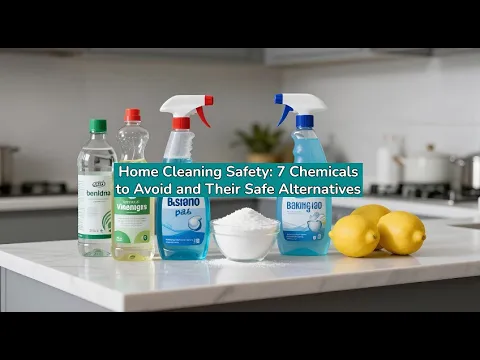
Home Cleaning Safety: 7 Chemicals to Avoid and Their Safe Alternatives
Environmental awareness encourages responsible behaviour and ecological stewardship. People have been adopting sustainable practices to reduce their carbon footprints while enjoying a clean and hygienic environment. While reducing single use plastic promotes responsible consumption, the majority of homeowners still use store bought cleaners to maintain indoor hygiene.
Traditional household cleaning products contain harmful VOCs and toxic chemicals that can pollute the air and water. Of course, these products can effectively remove stubborn stains and grime without any elbow grease, but excessive use can pose health hazards, such as respiratory disorders, skin and eye irritation, and even lung cancer. Fear not! Today we bring you a list of 7 chemicals you should avoid when sprucing up your home, along with their safe alternatives. Make sure you properly read the labels or make the most of DIY cleaning recipes.
Let’s Get Started!
- Ammonia: The Most Common Cleaning Chemicals
- Phosphates: Found in Detergents and Bathroom Cleaners
- Triclosan: Active Chemical in Disinfectants
- 2-Butoxyethanol: Hazardous Cleaning Chemical
- Monoethanolamine, Diethanolamine and Triethanolamine
- Sodium Lauryl Sulphate: Skin and Eye Irritant
- Phthalates: Artificial Fragrance
- Infographic: Do not Use These Cleaning Chemicals
- Wrapping Up
1. Ammonia: The Most Common Cleaning Chemicals
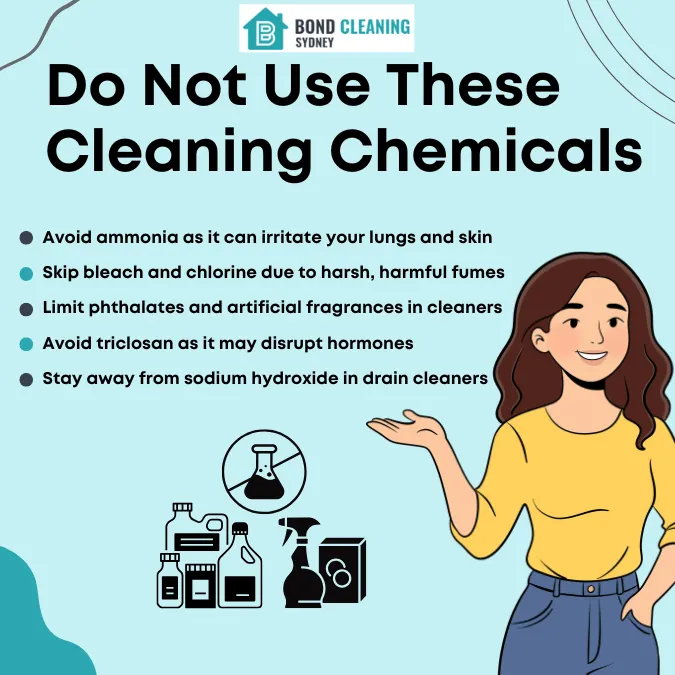
Have you ever used store bought window cleaners or toilet cleaners? These products often contain ammonia. It is a colourless gas with a strong, pungent smell. Ammonia (NH₃) is made of nitrogen and hydrogen and is commonly found in almost all cleaning products. It can effectively remove grease, grime and pet stains.
Unfortunately, the toxic fumes can irritate your eyes and skin, or even trigger coughing and wheezing. Excessive exposure can even cause kidney or liver damage, especially when mixed with other common cleaning chemicals. It is highly poisonous and can even damage the surface if used regularly.
Best Alternative:
You can use white vinegar, baking soda and plant based cleaning solutions for household cleaning. Many end of lease cleaning Sydney professionals even use vinegar as a multi purpose cleaner. You can dilute it with warm water and dish soap to dislodge pet stains, grime, rust, and calcium deposits from your household surfaces.
2. Phosphates: Found in Detergents and Bathroom Cleaners
These are chemical compounds containing phosphorus. Used in many cleaning products, it can soften hard water, dislodge grease and boost detergent effectiveness. Using not only leads to water pollution but also harms aquatic life. It can also cause excessive algae growth, making it difficult to spruce up the area.
Safe Alternative:
Switch phosphate based cleaning products with washing soda, baking soda and castile soap. It can effectively degrease cabinets, oven grills, bathtubs, stainless steel and other delicate surfaces without causing any damage. The best part is that parents can clean the house with young kids using eco friendly products.
3. Triclosan: Active Chemical in Disinfectants
Commonly found in disinfectants and dish soaps, Triclosan is an antimicrobial agent that can kill lethal germs and chemicals effectively. However, it is one of the most toxic chemicals that can cause hormonal imbalance (disruption of endocrine function) , respiratory disorders and skin infections.
Safe Alternatives:
You can use soap and warm water, rubbing alcohol, or hydrogen peroxide to kill lingering germs, mould, and mildew on surfaces. Spray 70% rubbing alcohol on doorknobs, light switches, windows, floors, tabletops, sinks, toilets, etc., to create a healthy, hygienic home environment. Many professional end of lease cleaning Sydney experts use alcohol based disinfectants to maintain a tidy, green home.
4. 2-Butoxyethanol: Hazardous Cleaning Chemical
These are commonly found in oven cleaners, rust removers and degreasers. 2 BE is a strong chemical that can irritate your skin and eyes. Other side effects include:
- Damage to red blood cells
- Liver and kidney damage
- Headaches and nausea when inhaled
- Reproductive causes, etc
It is present in products with a fruit based smell, such as citrus, orange, and lemon. So, be cautious and read labels properly.
Safe Alternative:
You can add 10 drops of citrus essential oil to deodorise your space. Using lemon and vinegar can also help you achieve spotless shine. It can freshen up your ovens, floors, and other surfaces without any harmful effect.
5. Monoethanolamine, Diethanolamine and Triethanolamine
These three chemicals are often available in liquid laundry detergent, floor cleaners, glass cleaners and oven cleaning products. When released into the air, it can cause respiratory disorders and other lethal issues. What’s worse, inhalation can cause lung disorders. Repeated usage can even damage the kidneys.
Safe Alternative:
You can use mild dishwashing cleaner or castile soap to remove stains and grime. Castile soap is a plant based cleaning product that can keep your floors shiny, windows gleaming and other delicate surfaces tidy.
6. Sodium Lauryl Sulphate: Skin and Eye Irritant
Another harmful cleaning chemical is SLS, which is found in dish soap and toilet bowl cleaners. It is a corrosive agent and can cause serious health issues after prolonged use. The toxic chemicals can also cause greenhouse gas emissions instead.
Safe Alternative:
You can use baking soda and mild dishwashing liquid to remove stains and grime from your rental home. They can help you pass your rental inspection without any stress.
7. Phthalates: Artificial Fragrance
It is found in almost all store bought cleaners because everyone wants fresh smelling cleaning products. Despite being a trade secret, end of lease cleaning Sydney professionals don’t recommend it.
It can cause endocrine disruption, reproductive issues, respiratory problems and long term health risks.
Safe Alternative: Use baking soda, natural deodorisers, essential oils, etc to maintain a clean, fresh and aromatic. It can banish musty smell, leaving your house smelling fresh again.
Infographic: Do not Use These Cleaning Chemicals
Wrapping Up
You must read product labels when buying store bought cleaners, and avoid these chemicals. Instead, bring eco friendly and green alternatives to spruce up your home and create a healthy and hygienic home environment. Smart choices can help reduce your carbon footprint.