


Tenant’s Guide: Legal Requirements Of End Of Lease Cleaning In Sydney
Moving out of a rental property in Sydney? Before you hand over the keys, there is one crucial task that can directly impact your bond refund: end of lease cleaning. While packing boxes and organising removalists may seem like the biggest challenges, it is the final inspection that often determines whether you walk away stress free or face unexpected deductions.
Many tenants assume a quick tidy up is enough but NSW tenancy laws have specific expectations about how a property should be returned. This article will guide you with the tenant’s legal requirements for end of lease cleaning Sydney. Understanding these, not only helps you meet those standards, but also protects you from unfair claims. When you know what reasonably clean actually means and how inspections work; you can move out confidently and secure your full bond, without unnecessary disputes.
- What Does Reasonably Clean Mean Under NSW Law?
- Fair Wear and Tear vs Tenant Caused Damage
- Is Professional Cleaning a Legal Requirement?
- Key Areas That Require Special Attention
- Why the Entry Condition Report Matters
- What Happens If There Is a Bond Dispute?
- Practical Tips for a Smooth Move Out
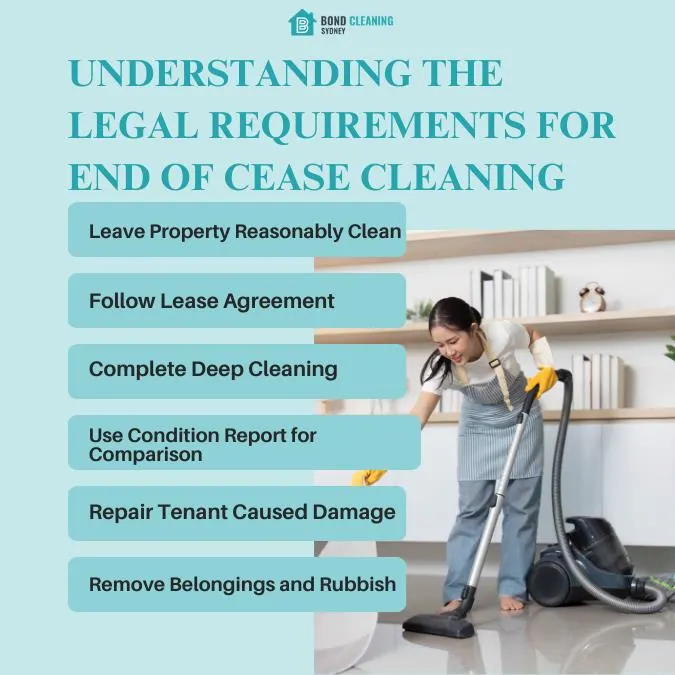
- Infographic For Understanding The Legal Requirements For End Of Cease Cleaning
- Wrapping Up
1. What Does Reasonably Clean Mean Under NSW Law?
Under the Residential Tenancies Act 2010 (NSW), tenants must leave the property in a reasonably clean condition at the end of their lease. This is the official legal standard, not perfect, not brand new and not necessarily professionally cleaned.
Reasonably clean generally means the property should be returned in a similar condition to when you moved in excluding fair wear and tear. If the home was tidy and hygienic at the start of your tenancy; it should look the same when you leave. The law focuses on cleanliness and maintenance, not unrealistic expectations.
2. Fair Wear and Tear vs Tenant Caused Damage
One of the biggest causes of bond disputes is confusion between, fair wear and tear and actual damage. Fair wear and tear refers to the natural deterioration that happens over time due to everyday living.
For example, slightly worn carpet in high traffic areas, faded paint from sunlight, or minor scuff marks on walls are considered normal. However, stained carpets, broken fixtures, chipped tiles or heavy grease build up in the kitchen are usually classified as tenant caused damage. Landlords can claim costs for damage, but not for normal ageing.
3. Is Professional Cleaning a Legal Requirement?

Many tenants assume that hiring professional cleaners is compulsory at the end of a lease. In most cases, this is not legally required unless it is specifically stated in your tenancy agreement.
For instance, if your lease mentions professional carpet cleaning due to pets, you may need to provide proof of service. Otherwise, you are only obligated to meet the reasonably clean standard. While professional services for top quality end of lease cleaning Sydney are not always mandatory, many tenants choose them for peace of mind and to minimise the risk of bond deductions.
4. Key Areas That Require Special Attention
During the final inspection, property managers tend to focus on certain areas more than others. Kitchens are at the top of the list, especially ovens, stovetops, range hoods and cupboards where grease and food residue accumulate over time.
Bathrooms are another critical area. Mould, soap scum, limescale and dirty grout are common inspection issues. In addition, walls, skirting boards, light switches, door handles and internal windows should be properly cleaned. Even small overlooked details can sometimes delay bond approval.
5. Why the Entry Condition Report Matters
The entry condition report is your strongest protection during the move out process. This document records the condition of the property at the start of your tenancy and serves as a reference point for comparison.
Before beginning your cleaning, review the original report carefully. Ensure the property is returned to a similar level of cleanliness. Taking date stamped photographs before handing over the keys can also provide valuable evidence. Proper documentation becomes especially important if disputes arise during end of lease cleaning Sydney inspections.
6. What Happens If There Is a Bond Dispute?
If a landlord believes the property has not been left in a reasonably clean condition, they may request additional cleaning or attempt to deduct costs from your bond. However, tenants in NSW have rights and can apply directly for their bond refund through Rental Bonds Online.
If there is disagreement, the landlord must apply to the NSW Civil and Administrative Tribunal (NCAT) to claim compensation. Keeping cleaning receipts, communication records and photographic evidence can significantly strengthen your case and help resolve issues fairly.
7. Practical Tips for a Smooth Move Out
Start cleaning well in advance rather than leaving everything for the last day. Dividing tasks into sections, kitchen, bathrooms, bedrooms and outdoor areas makes the process more manageable and reduces stress.
Use a detailed checklist aligned with your entry condition report to ensure nothing is missed. If time is limited or you want added assurance, hiring professionals experienced in end of lease cleaning Sydney can help you meet inspection standards and secure your bond refund with confidence.
Infographic For Understanding The Legal Requirements For End Of Cease Cleaning
Wrapping Up
End of lease cleaning is more than just a courtesy; it is a legal responsibility. Understanding what the law requires and preparing accordingly can prevent unnecessary disputes and financial setbacks. By focusing on reasonable cleanliness, documenting everything carefully and knowing your rights, you can complete your tenancy smoothly and maximise your chances of receiving your full bond refund.