


DIY End Of Lease Cleaning Tips For NSW Rentals
Key Takeaways:
- DIY end of lease cleaning can save you moving costs while giving you complete control over the process.
- NSW tenants must read the tenancy agreement for specific cleaning clauses, refer to the property condition report and follow a pre-approved end of lease cleaning Sydney checklist to pass the inspection.
- Do necessary preparations in advance, such as arranging necessary supplies, preparing all natural cleaning products and decluttering the space.
- Clean top to bottom to prevent dust mess and use baking soda to degrease kitchen surfaces. You can also use vinegar to remove limescale from bathroom fixtures and fittings.
- Consider hiring professional cleaners if the property is heavily soiled or you have tight inspection deadlines. They can help you secure your full bond.
As a tenant, performing end of lease cleaning on your own helps you reduce expenses while ensuring your rental property is ready for the final inspection. However, a top quality cleaning requires more than basic chores. Under the Residential Tenancy Laws in NSW, tenants are obligated to meet the cleanliness standards set by the landlords and property managers.
A recent report revealed that more than 1 in 10 tenants are losing their bond money due to substandard cleaning at the end of a tenancy. So, if you are replacing professional end of lease cleaning Sydney services with DIY skills, you’ll need to understand the state specific requirements, landlords’ expectations and of course, tenant responsibilities for spotless results.
Here in this guide, we’ll break down the most efficient DIY end of lease cleaning tips for NSW rentals. All are approved by professional cleaners to give you peace of mind. Ensure you read your signed copy of the lease agreement for any specific cleaning clauses, such as professional carpet cleaning, etc., to better perform the task perfectly.
Let’s Get Started!
- What is End of Lease Cleaning in Sydney?
- Refer to the Property Condition Report
- Stock Up on All the Necessary Cleaning Supplies
- Clear the Clutter & Remove Personal Belongings
- Dusting From Top to Bottom
- Pay Attention to One Room At a Time
- Use Baking Soda to Degrease Kitchen Cabinets, Appliances and Sink
- Deep Clean Bathroom Fixtures and Fittings
- Pay Attention to Most Overlooked Areas
- Clean the Carpets and Floors
- Infographic: End of Lease Cleaning Tips for Tenants
- Wrapping Up
- Frequently Asked Questions
1. What is End of Lease Cleaning in Sydney?
It is also known as bond cleaning and is performed when moving out of a rental property. End of lease cleaning is a one time session that covers all rooms, bathroom fixtures and fittings, kitchen appliances, sinks, walls, windows, and outdoor areas to help create an inspection ready property for the sake of bond money.
Ensure you follow a pre-approved cleaning checklist to meet the landlord’s expectations without any stress. From dusting hard to reach spots to scrubbing stubborn grease and mopping floors, everything will be covered. Let’s unveil some great DIY cleaning tips:
2. Refer to the Property Condition Report
The property condition report is evidence of how a leased property was before a renter moved in. It must be filled out at the beginning and end of a tenancy. The document records the general condition of the property, all rooms and fittings.
At the end of a tenancy, tenants must compare the initial condition report with the property’s current status to create a customised cleaning checklist. Also check for damage beyond fair wear and tear because tenants are liable for the damage caused by them. It is important to understand your cleaning responsibilities and secure your hard earned bond money.
Tip: Referring to the PCR can help you create a detailed end of lease cleaning checklist without any stress.
3. Stock Up on All the Necessary Cleaning Supplies
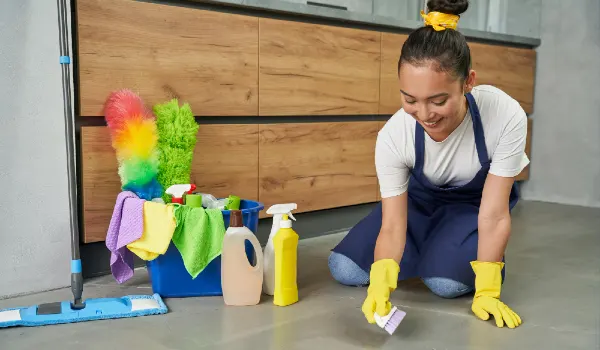
Make sure you arrange essential cleaning tools and products to banish dirt, grime and grease. Even professionals need the right set of supplies to deliver a guaranteed end of lease cleaning Sydney service. So, here’s what you’ll need:
- A telescopic duster
- Microfibre cloth and dusters
- Sponges and brushes
- A HEPA friendly vacuum cleaner with assorted brush attachments
- Scrubbing pads
- Mop and bucket
- White vinegar
- Baking soda
- Dishwashing liquid
- Warm water
- Rubbing alcohol
Note: According to NSW EPA, greenhouse gas emissions for NSW were 136.6 million tonnes CO2-e in 2019. By choosing green cleaning products, you can protect the environment and the entire ecosystem.
4. Clear the Clutter & Remove Personal Belongings
Before you begin the process, remove unnecessary clutter and all your personal stuff and large furniture pieces. This will help you access hidden dirt and debris effectively. Toss broken, torn, or useless items, or drop them off at a recycling centre. For your personal belongings, pack them using quality materials and put them aside. You can also donate pre loved items to the local charity as well.
For landlord’s furniture, seek their permission before taking them out. Also, decluttering can be time taking process; ensure you do it at least two or three weeks before your final inspection day.
5. Dusting From Top to Bottom
Professional end of lease cleaners Sydney always recommend top to bottom approach, especially when tackling loose dirt, dust and other allergens. Use a telescopic duster to remove cobwebs, inspect marks and dust from ceiling fans, walls, vents, light fixtures and the top of cupboards. Next, you can move onto to lower surfaces like shelves, window sills, tracks, blinds, door tracks, skirting boards and floors for efficient results.
This approach prevents loose dust from falling into already cleaned surfaces, saving you a lot of time, money and energy. For ceiling fan blades, you can even use an old cotton pillowcase. Just slide in and wipe down the blades effectively.
6. Pay Attention to One Room At a Time
Don’t overburden yourself when preparing your NSW rental for the final inspection. Clean one room at a time and follow a proper cleaning checklist because minor oversights could lead to bond deductions. You can either start with the kitchen or bedrooms. This is completely your choice. Make sure you keep a cleaning caddy with you and spruce up everything efficiently.
7. Use Baking Soda to Degrease Kitchen Cabinets, Appliances and Sink
Baking soda is one of the most powerful natural cleaning products that can help remove cooking grease, grime and gunk effectively. Its mildly alkaline properties help break down grease, absorb bad odours and remove stubborn stains without causing damage or discolouration.
Make a thick paste with water and apply it to kitchen cabinets, the oven, and the sink. Leave it for a few minutes and scrub gently with a sponge. You can repeat the process for a spotless shine.
8. Deep Clean Bathroom Fixtures and Fittings
The majority of tenants in NSW lose their bond because of scaly faucets, stained toilets and lingering odours in a bathroom. Make sure you deep clean every nook and cranny using all natural cleaning products. Here are some great tips:
- Fill a plastic bag with vinegar and warm water and soak the shower head. Secure a rubber band and leave it overnight to remove soap scum and limescale.
- Spray vinegar on the glass doors and scrub gently with a sponge. Run a rubber squeegee to prevent streaks.
- Use baking soda to remove calcium deposits from the bathtub, sink and other natural stone surfaces.
- Apply white vinegar inside your toilet bowl and leave it for 10 minutes. Then, sprinkle baking soda and close the lid again. Scrub with a brush and rinse. Clean the rim, seat and behind the ‘S’ bend.
- Remove mould and mildew from tiles and grout using 3% hydrogen peroxide. Leave it for a few minutes and scrub with an old toothbrush. Dry it completely to prevent re growth.
9. Pay Attention to Most Overlooked Areas
Remove dust, dirt and stains from overlooked spots like window tracks, sills, door tracks, behind the sink, door knobs, appliance handles, AC vents and filters, exhaust fans, light switches, etc. You can use a vacuum cleaner with a crevice brush attachment or an old toothbrush to get into nooks and crannies.
10. Clean the Carpets and Floors
Make sure you vacuum all carpets and rugs to remove embedded pet hair, dust, and dirt without causing any damage to the surface. You can remove pet stains and other spills by blotting the surface using a cloth dampened in a white vinegar solution.
Also, sweep and mop the floors, and don’t use excess water on hardwood floors to prevent moisture buildup or warping. If your tenancy agreement requests professional carpet cleaning, include the service with a professional end of lease cleaning Sydney well in advance.
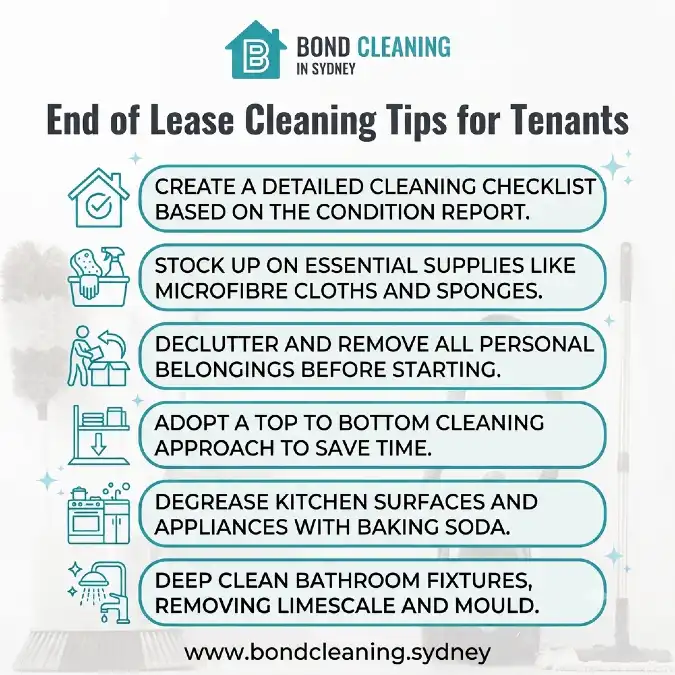
Infographic: End of Lease Cleaning Tips for Tenants
Wrapping Up
There is no rocket science behind cleaning NSW rentals. You must follow a pre approved cleaning checklist and consider these easy tips to achieve spotless and inspection ready results. If you are concerned about your bond, book experts for a quality bond cleaning service in Sydney, NSW and impress your fussy landlord.
Frequently Asked Questions
1. Can I do an end of lease cleaning myself in Sydney?
Yes. Sydney tenants can complete end of lease cleaning on their as long as they maintain the set cleanliness standards. Under the tenancy laws, the property must be returned in a reasonably clean condition beyond fair wear and tear.
2. How long does DIY end of lease clean take?
The time depends on your cleaning skills, the size and condition of the property. If you are doing it alone, a one-bedroom apartment may take 5 to 6 hours while larger properties may require an entire day.
3. What is the 20 minute rule of cleaning?
It is a time management practice where you set a timer for 20 minutes and clean the room or surface. It is good to pair it with a 10-minute break for efficient results.
4. Are outdoor areas included in the end of lease cleaning checklist?
A standard bond cleaning checklist includes a patio area, garage walls and floors. If windows are accessible, wash them from outside and impress your landlord.
5. When should I hire professional end of lease cleaners Sydney?
You can consider hiring experts if the cleanliness has been overlooked for quite a long time. You can also hire when you are under a serious time crunch or unsure about securing your bond.